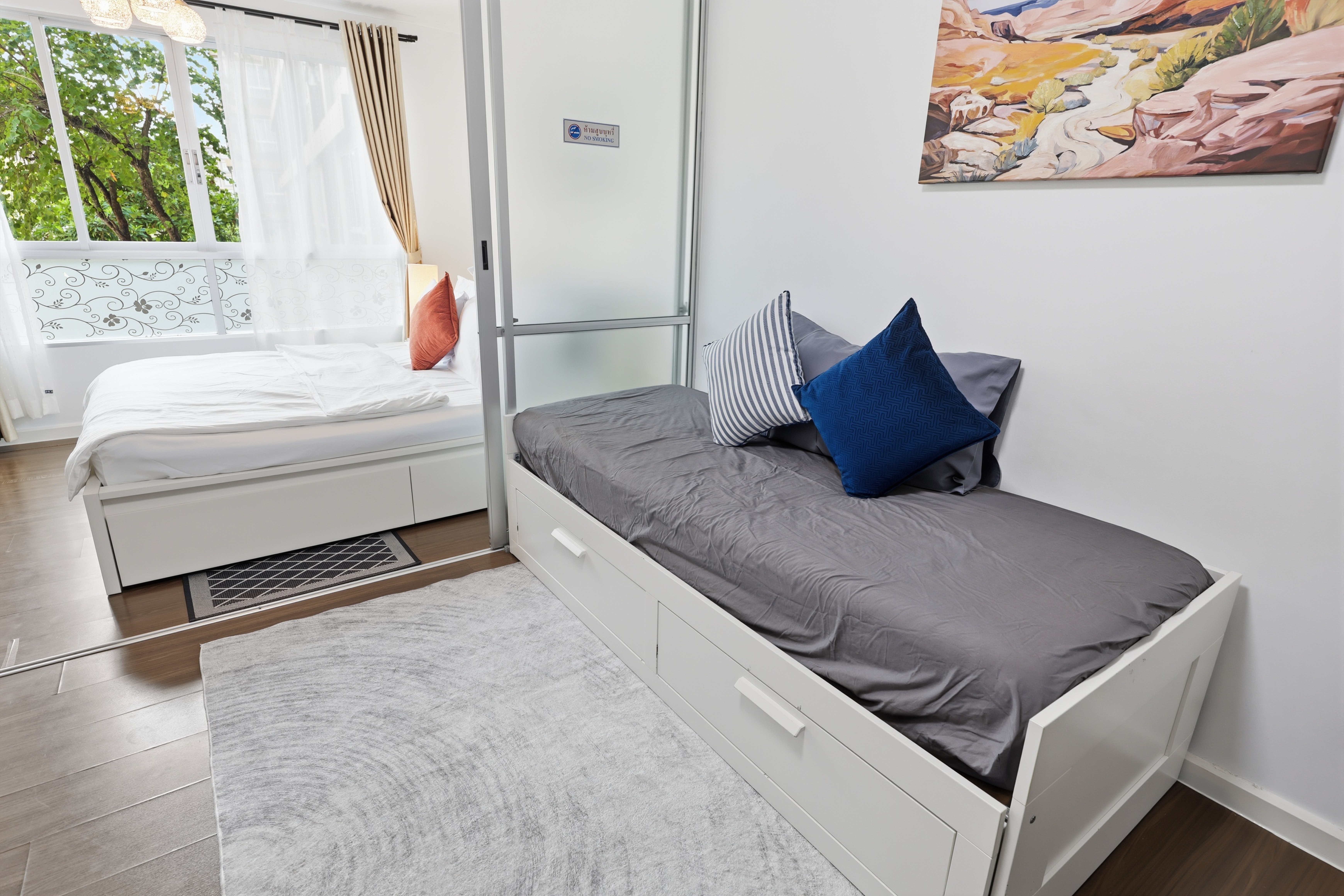
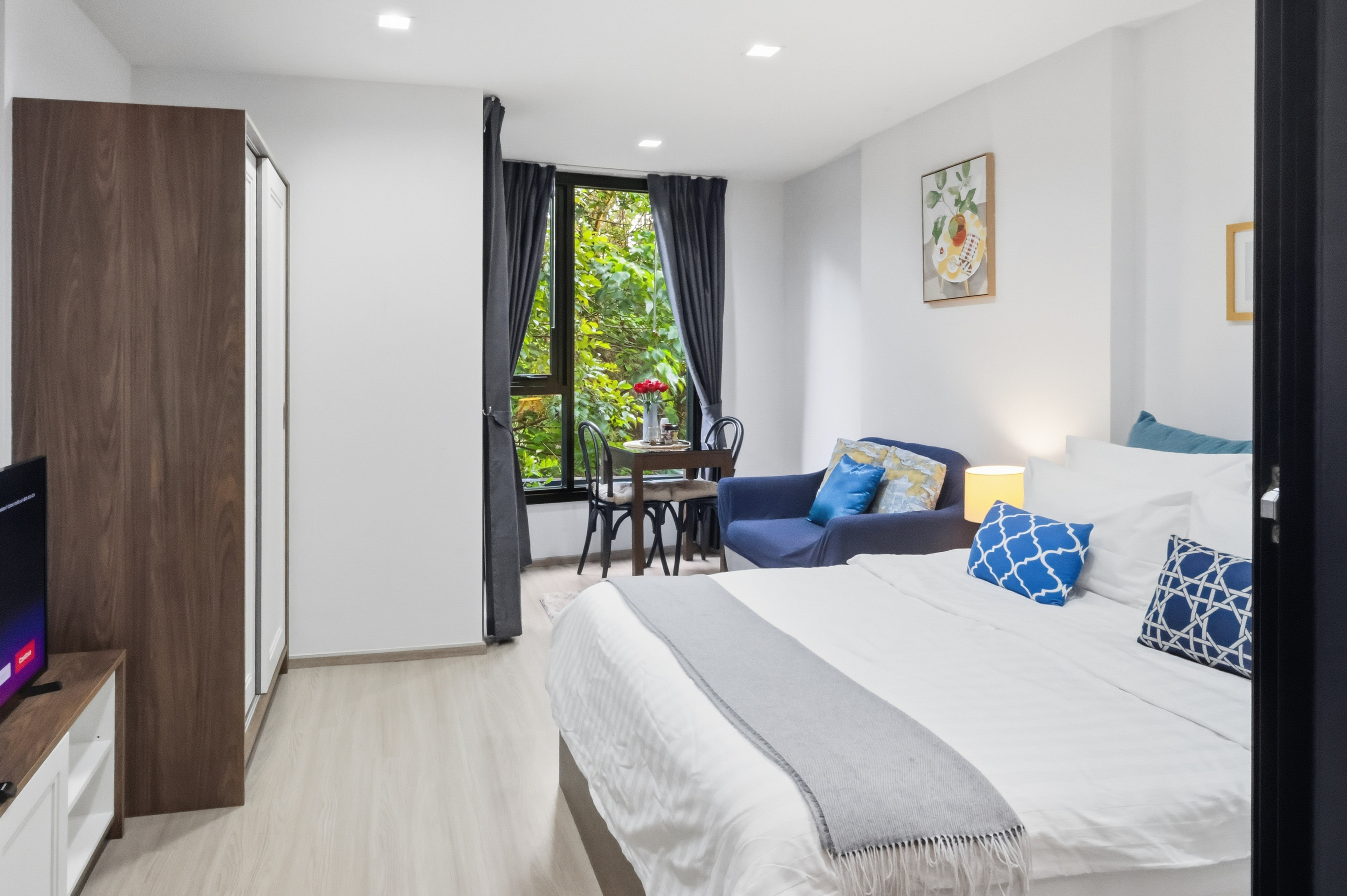
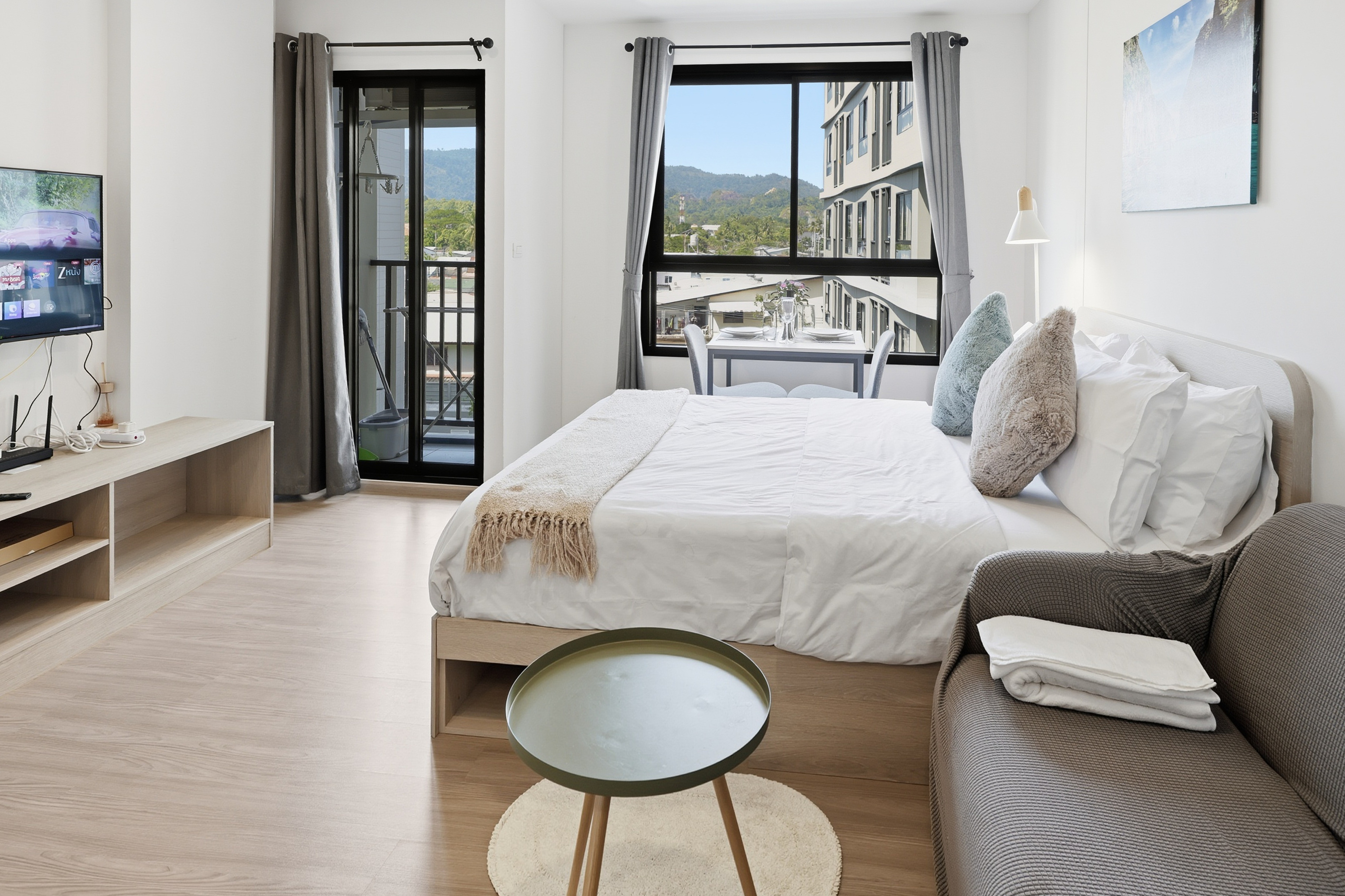
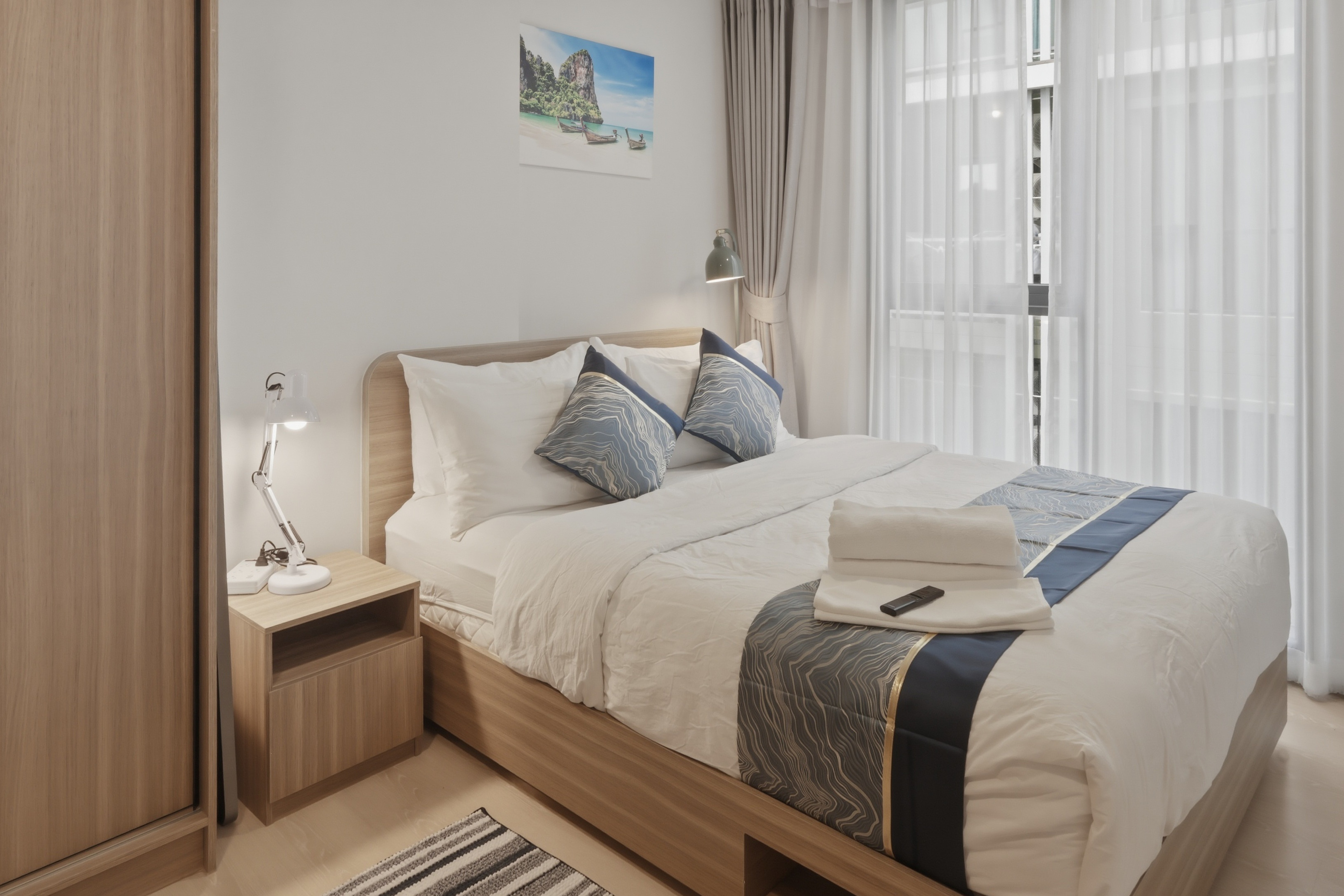
The rice-fields wallhanging
How a Sop Moei Arts wallhanging in the living room came about — a September afternoon in the mountains, three days of dense rain, and the rice fields the colours were taken from.
The wallhanging on the living-room wall is a Sop Moei Arts piece — Sop Moei is a Karen weavers’ nonprofit in the mountains of Sop Moei district, Mae Hong Son. The piece was designed at Sop Moei one September afternoon and woven over the next three days of monsoon rain by one of the workshop’s weavers, with the designer working alongside her at the loom. It sat in the workshop’s collection until the host came across it.
What follows is from a note the designer sent us when we asked him for the back-story. We’re reproducing it here, exactly as he wrote it.
The inspiration for your wallhanging came about one September afternoon, up in the mountains of Sop Moei where I lived at the time. My house and the weaving sheds are ringed by heavy forest; this included a terraced rice field. One of the weaving sheds stands on the edge of the rice field — this is where I started to work with the weaver.
For inspiration I decided to see if I could capture the mood of the day. Septembers see the heaviest and most sustained rainfalls in that area; the sky was dark but through the rain there were faint openings, brushing layers of purple above the fields. Now and then a shaft of sunlight would flash through.
In the terraces the rice stood green, reflections of purple here and there, suddenly gold when the clouds opened.
I went to our bins, selected the yarn colours I was seeing, combined them, and started working with the weaver.
There is water at the bottom of the wallhanging. Dark green, some reflected colours from the sky. Thereafter the rice appears, rising up, terraced. Beyond the fields — darkness, broken by sequences of purple, fading out into the dark sky.
Look at the hanging again, and see if you can follow how the wallhanging was built.
We didn’t finish it in a day. Three days, maybe, every day the same, dense rainfall.
How to read it
Standing in the living room with the piece in front of you, the composition reads bottom-up the way the designer describes it:
- The lowest band — dark green, with flashes of purple. The water at the foot of the terraces, picking up the sky.
- The rice terraces — bands of green stepping upward, holding most of the visual weight of the piece. Gold breaks through in places where the cloud opened.
- Above the fields — the dark forest line, with sequences of purple working their way up through it.
- The top — the rainy September sky, faint openings above the dark.
Once you’ve read it once, it’s hard to un-see.
About Sop Moei Arts
Sop Moei Arts is a nonprofit that has worked for forty years with Karen weavers in Mae Hong Son province, in the far north-west of Thailand. The aim, in their own words, is to provide a sustainable source of income to the weavers and to keep alive traditional craft skills. Pieces are hand-woven on back-strap looms; alongside the wall hangings the workshop also produces cushion covers, table linens, scarves, handbags, and bamboo and rattan baskets. Their showroom is in Chiang Mai, and pieces are also available through their online shop.
The second wallhanging in the suite is also Sop Moei — paired with the rice-fields piece for the room.